


Forum Replies Created
-
AuthorPosts
-
January 1, 2023 at 13:10 in reply to: Rinktis vienos, dviejų ar su daug dažnių juostų kolonėles? #9168
Tai kokias akustines sistemas reikia rinktis arba konstruoti, kad tiesiausiu keliu nuvestų į sėkmę?
Prieš pratęsdamas temą, leiskite pasakyti/pakartoti išsakytą mintį – kokybiškoms GAS OB (atvirosios) arba elektrostatinės dipolinės AS nėra tinkamiausias pasirinkimas. Susiaurinus apžvalgos lauką, pabandykime apžvelgti dvijuostes ir trijuostes sistemas.
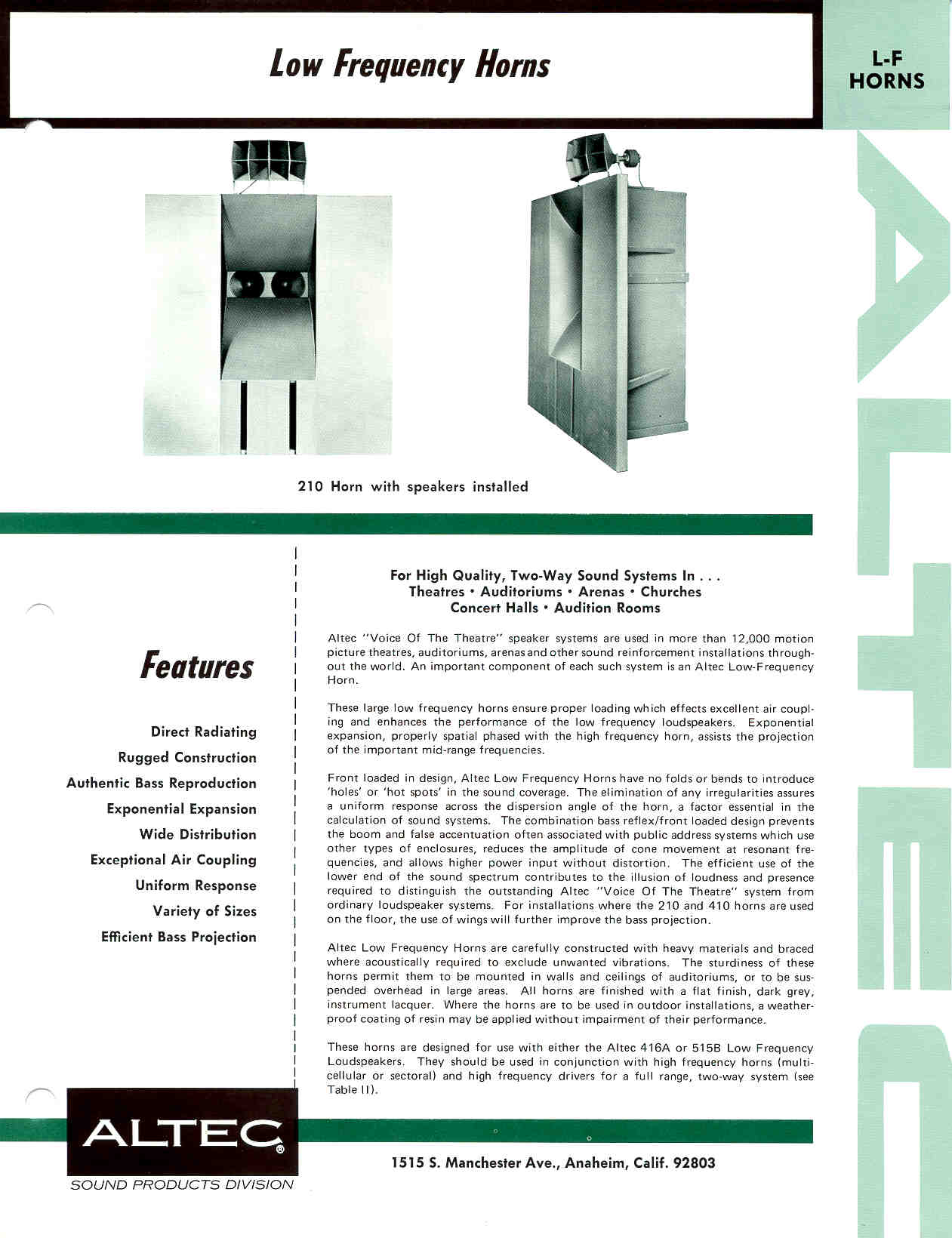
Pradžioje nedidelis istorinis rakursas.Altec Lansing mums parodė minimalistišką kelią – didelio jautrio dvijuostės AS korpusuose su FA. Tai buvo visa serija sistemų, tinkančių kinui, salėms ir koncertams įgarsinti. Netgi buitinėse sistemose buvo naudojami didelio jautrio 15“ žemadažniai ir ruporinis aukštadažnis. Sistemos puikiai atkurdavo muziką, AS kokybė pralenkdavo tuometinius garso šaltinius iš AM radijo, šelako plokštelių ar buitinių magnetofonų. Nepamirškime, jog kalbame apie tikrai seną laikotarpį, matuojamą keliais dešimtmečiais! Aš pats ilgai džiaugiausi Altec Lansing Model-19 kolonėlėmis, kurios akustikos inžinerijos enciklopedijoje minimos kaip pati geriausia buitinė dvijuostė sistema.
Handbook for Sound Engineers apie Altec 19:
Model 19 yra 1976-ųjų projektas, gavęs Elektronikos Pramonės Asociacijos (EIA) apdovanojimą monitorių klasėje. Tos pačios struktūros dvijuostės kinui turėdavo priekio ruporą kino ekrano slopinimui sumažinti ir multisektorinius ruporus tolygiam įgarsinimui gauti:
Dvijuostės tiko didelių erdvių – stadionų ir sporto arenų įgarsinimui.
Nuotraukoje Altec Big Bertha, apie kurią plačiau čia.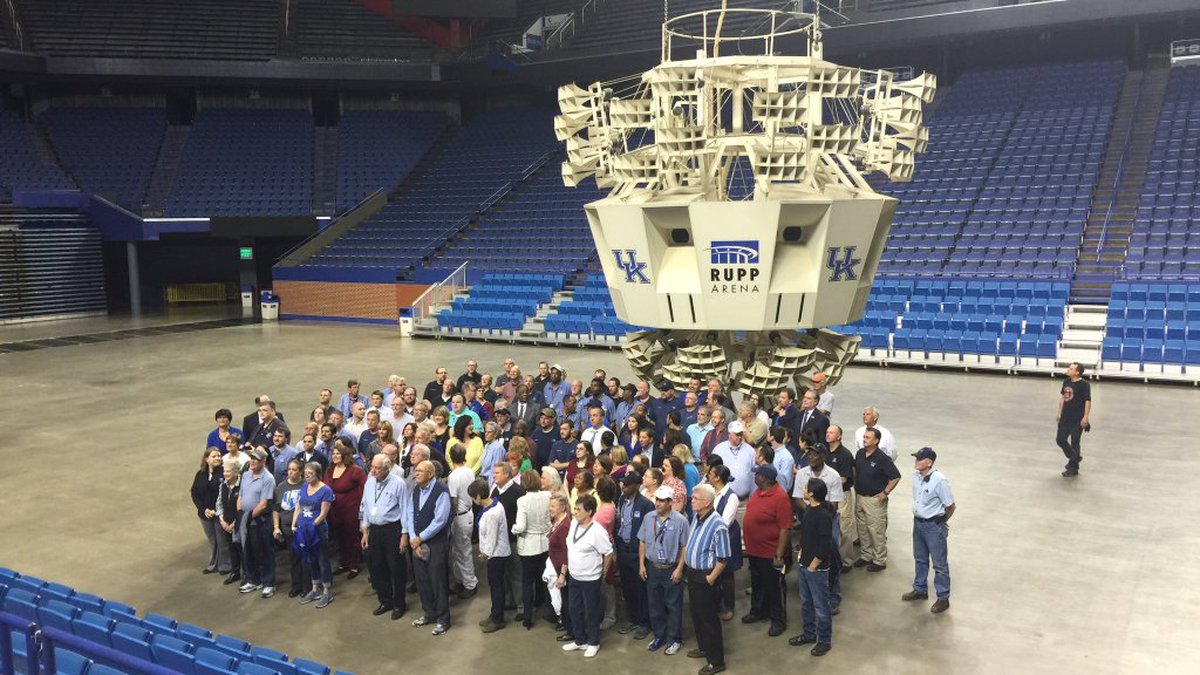
-
This reply was modified 3 years, 1 month ago by
 Belas.
Holidays, and I got sick – sorry.
I will share my thoughts on what I would do if I listen to SF Cremonese loudspeakers.
I’ll use A-75 power amp. If everything has been done for good acoustics in the music room, I would try to catch the last decibels using DG-68 Voicing EQ. If I decided to go further, I would go to listen to high sensitivity active audio system.The structure of the system in our business is the main factor, so I would not spend money on “quantitative” changes; bi-wiring, passive bi-amping, or A-300 instead of A-75 are “quantitative” changes. The process is attractive, but there is no hope for great success.
-
This reply was modified 3 years, 1 month ago by Belas.
Visiems audiofilams linkiu, kad Šv. Kalėdų rytas atneštų sėkmę, stiprybę ir viltį!
 https://www.youtube.com/watch?v=i3yqhzeoAos
I very like active structure. If you do not can/want to remove passive crossovers, then I’d not to recommend to buy expensive DF-65. From other hand, if you trust in active structure, then DF-65 can be used in any other your sound system at the future. I’m talking, that you can win quality of sound with semi-active SF Cremonese. Low frequency and Mid frequency passive filters must be disconnected, and MF-HF filters stay passive.
If about DG-68, then would be fine to know more about acoustic treatment of your room. In any case I’d like to start with room acoustic and the last bits (some decibels) shall be arrange with Voicing EQ.
-
This reply was modified 3 years, 2 months ago by Belas.
Active topology is the step into best sound quality, which you can draw from loudspeakers. It’s a “quality”, not “quantity” way as is with DG-type or other room equalizer equipment.
The main goal for an active system is to avoid any reactive components in the signal path from the amplifier output to the speaker coil. If you leave passive crossovers in the speakers, then it will not be an “active” audio system at all.
Switching from passive to active is not difficult – you need to turn off the crossover or short it so that the signal from the speaker terminal goes directly to the speakers.
If you are using multi-way loudspeakers, then a semi-active structure can be used; low and mid/high frequencies are served by an active 2-way crossover, and mid-high are served by a regular passive crossover of multi-way loudspeakers.
It can be mentioned that two-way high sensitivity systems are the area of use for active audio systems. There in FB group you can see some nice pictures.
The list of advantages in favour of active crossovers and multi-amplification you may find in the book – Loudspeakers For Music Recording and Reproduction by Philip Newell and Keith Holland or there.
-
This reply was modified 3 years, 2 months ago by Belas.
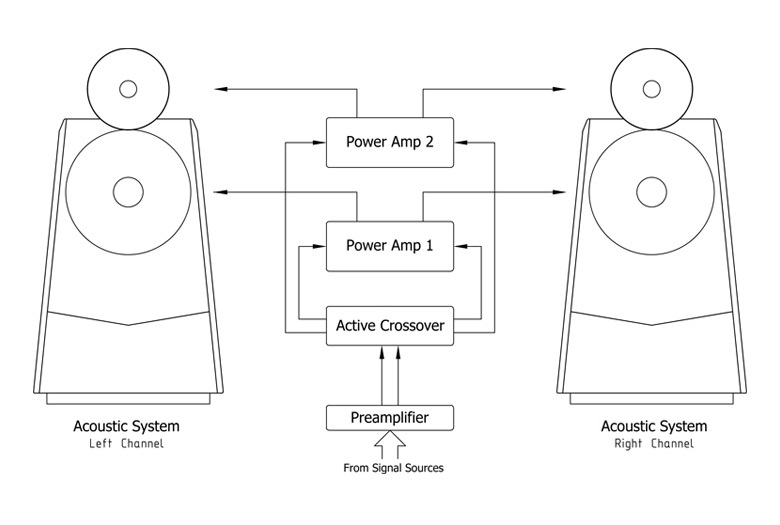
In your picture active audio system. This structure is the best, cause let us to avoid degradation of passive filters, to achieve maximum damping and highest efficiency.
A few notes around your picture:
– in an active system passive filters must be removed;
– if the speaker modules are acoustically tuned, then no signal delay is needed and an analog crossover can be used;
– DG-68 can improve the sound at the hot spot at the expense of deterioration in other areas of the room. So, I’d like to recommend to improve the acoustic properties of the room and disconnect DG-68.For decades, I have been using analog active systems of the following structure:
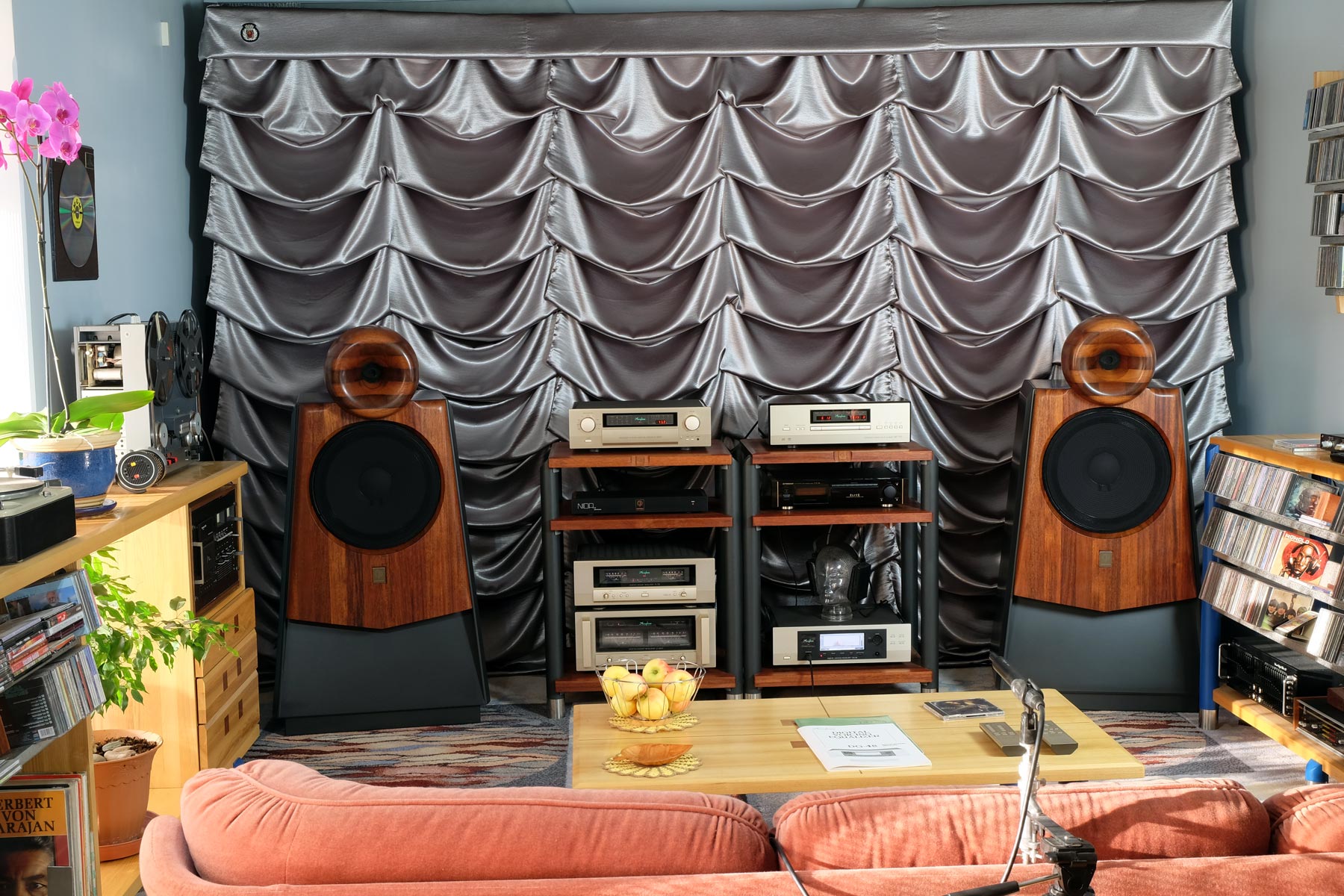
In the photo bellow my experiments with DG-48. Today I listen to the music without any EQ.
-
This reply was modified 3 years, 2 months ago by Belas.
This is so called “passive bi-amping” structure and you can use such a connection:
1. DP-750 -> DG-68 -> C-2850.

2. One RCA output from C-2850 to P-7300 (LF module), the other output from preamp to A-75 (HF module).

-
This reply was modified 3 years, 2 months ago by Belas.
I expect you are asking how to connect Accuphase DG-68 Voicing Equalizer.
Your list of equipment allows you to use different speaker connection schemes. Without a block diagram, it is difficult to answer precisely, but the principle of connecting the DG-68 does not change – the device must be connected into a low signal line.
I’d like to recommend to use digital connection DG-68 in a line between CD player DP-750 and C-2850 preamplifier as indicated in manufacturer documentation: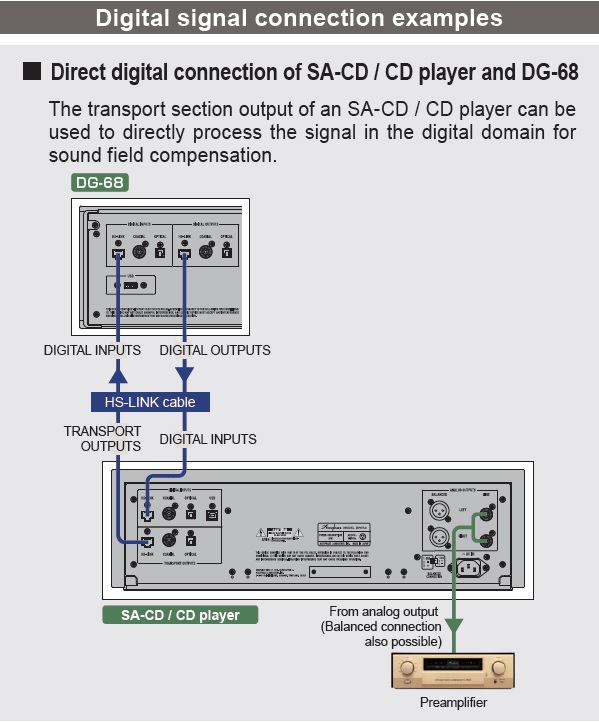
Then the signal from C-2850 output is fed in the same way as you do without using DG-68.
If you like to use analog connection, then you can use XLR or RCA cables to attach DG-68 voicing equalizer between CD player and preamp:
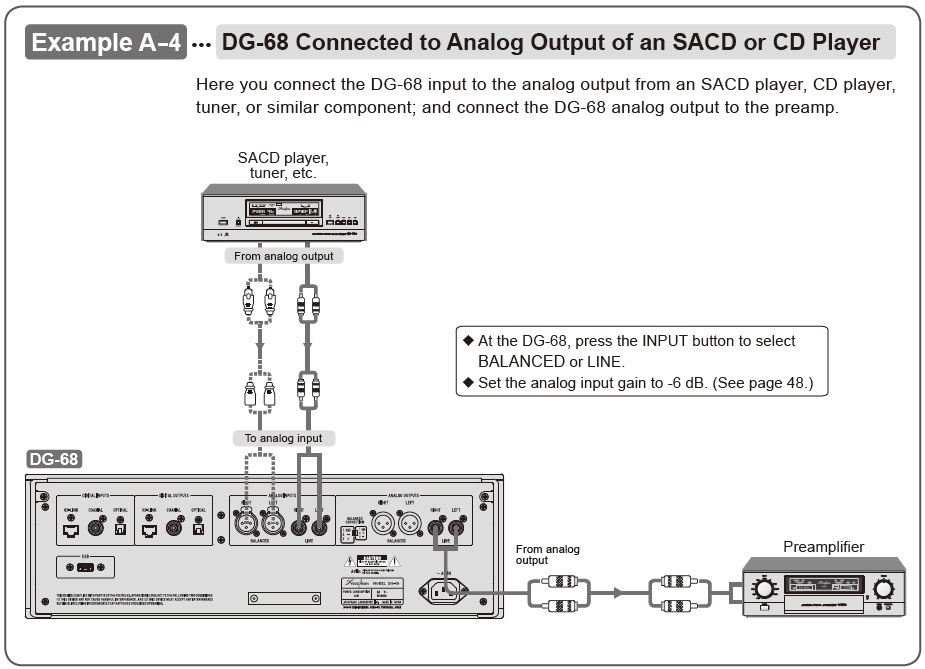
Or between preamp output and power amps as shown in such a diagram:
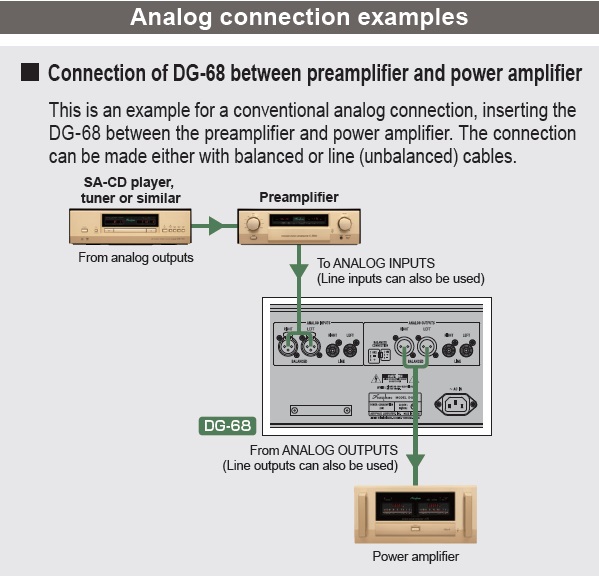
In this situation, the connection of your power amplifiers also remains as it was without the use of DG-68.
If the answer does not suit you, please describe in more detail your intention for using P-7300 and A-75 power amps.
-
This reply was modified 3 years, 2 months ago by Belas.
Stiprintuvų konstruktoriams tranzistoriai suteikė iki tol nematytų galimybių. Skirtingo pralaidumo P-N-P ir N-P-N bipoliariniai, JFET-N ir JFET-P, NMOS ir PMOS, abiejų pralaidumų MOSFET ir daug kitų specialios paskirties puslaidininkinių stiprinimo elementų patikimi ir nebrangūs. Norintys klausyti su lempinių stiprintuvų “transformatorių” iškraipymais, tranzistoriniame stiprintuve gali įstatyti išėjimo transformatorius. Jei transformatorių iškraipymų per mažai, skiriamuosius kondensatorius galima pakeisti transformatoriais kaip tą matome Sakuma lempiniuose. Dažnių juostą galima apriboti, galima atjungti n.g.r., išėjimo galią sumažinti iki Vato ir džiaugtis “lempiniu” garsu.
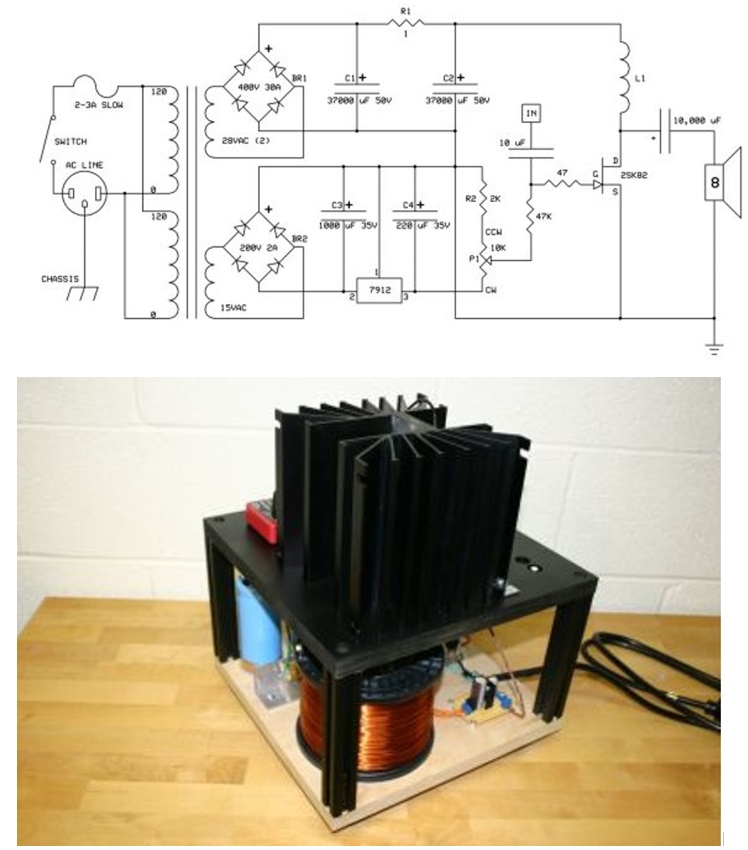
Michailas Rothasteris 2011-ais susikonstravo vientaktį stiprintuvą su SIT tranzistoriais. Šių tranzistorių charakteristikos panašios į triodų, todėl garsas panašus į lempinio su triodu SET. Tranzistoriniam nereikalingas išėjimo transformatorius, todėl pasigaminti tokį gali daugelis lituotojų.
Parametrai ir schema:
Savadarbio su SIT tranzistoriumi pilna schema ir konstrukcija:
 Atšventę Hai-endinių lempinių SE 30-metį galime laukti pramoninių tranzistorinių stiprintuvų 50-mečio.
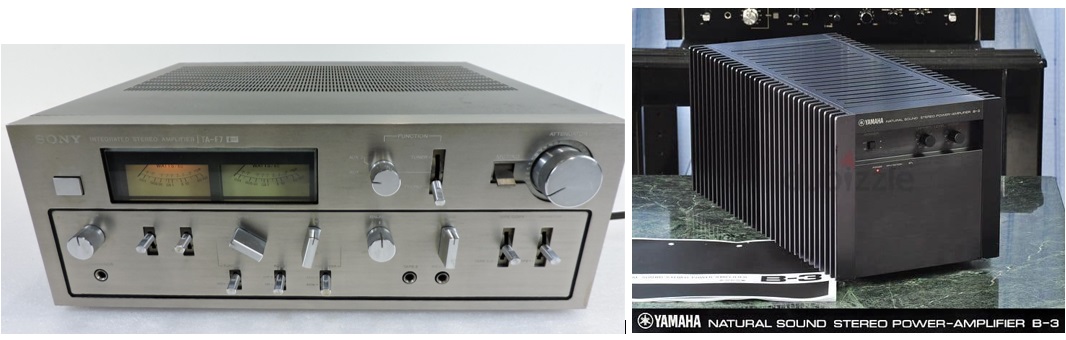
Sony TA-F7 (1976 m.) ir Yamaha B-3 (1977 m.) su V-FET (SIT) galios tranzistoriais:
-
This reply was modified 3 years, 2 months ago by Belas.
Girdime šnekant, kad kai kurie tranzistoriniai stiprintuvai skamba kaip lempiniai.
Tai siečiau su A-klasės tranzistoriniais, kurių iškraipymuose vyrauja lyginės harmonikos. Geri A-klasės tranzistoriniai stiprintuvai nevargina klausos, todėl žmonės prisimena garsą iš lempinių stiprintuvų su didelio jautrio kolonėlėmis. Svarbu tai, kad geri tranzistoriniai gali dirbti į sudėtingą apkrovimą – toks dažniausiai būna jungiant šiuolaikines lentynines arba daugiajuostes AS.
Sugrįžtant prie lempų, dvitakčiai lempiniai su n.g.r. būtų aukštesnio techninio lygio stiprintuvai. Tokių iškraipymai būna nedideli, o galia pakankama klausyti iki garsiai. Vientakčių galimybės mažesnės, bet su labai galingomis lempomis pirmasis Vatas turi palyginti nedaug iškraipymų. Su ruporinėmis AS toks vientaktis daugelį gali džiuginti.
Altec Iconic monitoriai su kažkokiu Manley lempiniu SE režimu būtų neblogas variantas muzikai namie klausyti.
-
This reply was modified 3 years, 1 month ago by Belas.
-
This reply was modified 3 years, 1 month ago by
-
AuthorPosts